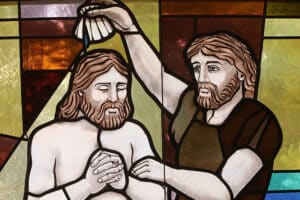
Search the Scriptures, and except for the Holy Family, no person is more favored by God than St. John the Baptist. All four Gospels acclaim this holy man and set him apart from others. From before his birth, he was chosen by God to announce, baptize and identify Jesus as the long-awaited Messiah.
Looking at the totality of his brief life, you see the hand of God at every turn. John’s unique role in salvation history was immortalized by Jesus who said, “I tell you, among those born of women, no one is greater than John” (Lk 7:28).
While we celebrate both John’s birth (on June 24) and death (Aug. 29), it is during Advent that the liturgy amplifies John’s role as the precursor of Christ. It is John who, as God’s instrument, tells the world to get ready, the Messiah is coming; it is John who will then single out the Messiah living in the midst of man.
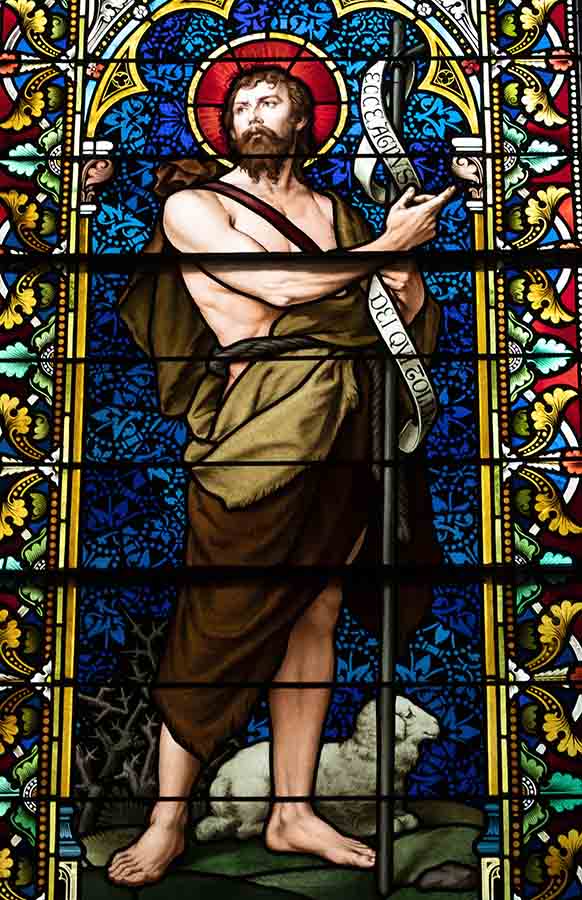
The church teaches that not only does Christ come at Christmas, but he will come again at the end of time. In both cases, we are prompted to prepare our hearts and souls for these events. John tells us how to prepare, to reform our lives; the church offers us the means during this holy season through penance, confession and sincere conversion.
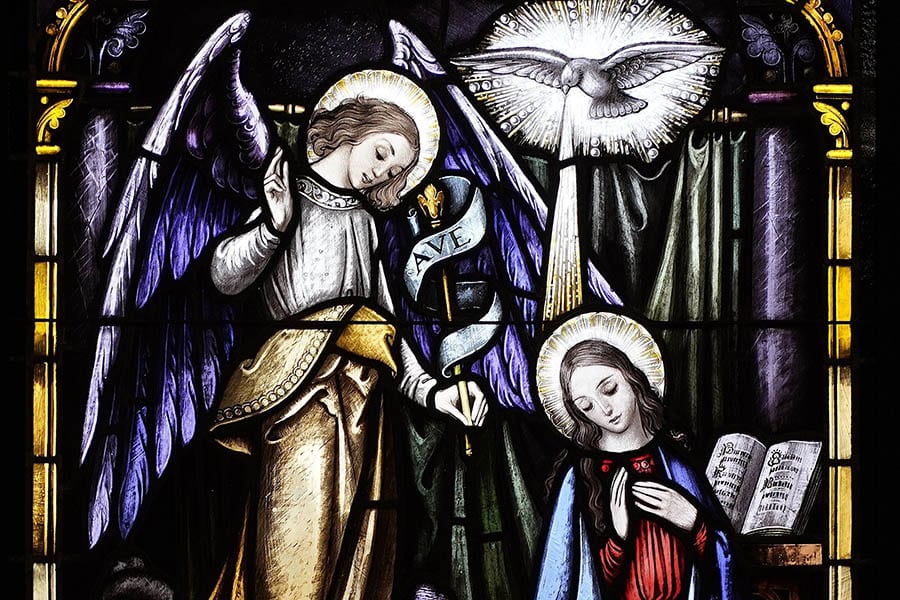
John is the child of Zechariah and Elizabeth, an elderly, childless, holy couple living in the hill country of Judea. His birth was revealed by an angel, who told Zechariah that he and Elizabeth would have a son. The angel was Gabriel, who later announced to a teenage Hebrew girl that she would become the Mother of God.
Gabriel told Zechariah the child’s name would be John, and “he will be filled with the Holy Spirit even from his mother’s womb, and he will turn many of the children of Israel to the Lord their God. He will go before him in the spirit and power of Elijah … to prepare a people, fit for the Lord” (Lk 1: 15-17). Zechariah, believing that he and Elizabeth were too old to have a child, refused to trust the angel’s message and, as a result, was struck mute. He remained so until John was born.
The Visitation is one of the most stirring, most remembered Scripture passages: the story of Mary, pregnant with Jesus, either walking or riding on some uncomfortable conveyance, making the dayslong journey from Nazareth to the Judea hill country to visit with Elizabeth.
Mary had been told by the Angel Gabriel that Elizabeth, her elder relative, was six months pregnant with John. St. Luke’s Gospel (1:39-45) describes Mary’s arrival. Elizabeth is humbled that the Mother of God would come to care for her and her unborn child.
When Mary entered the house, John leaped in his Mother’s womb, and Elizabeth was “filled with the Holy Spirit.” About this scene, St. John Chrysostom wrote: “(John in the womb) has not yet seen the light, but he points out the sun; he has not yet been born, and he is keen to act as precursor.”
Because Elizabeth was “filled with the Holy Spirit,” John was baptized in the womb and thus born without sin. John, like the Virgin Mary, was especially picked by God; in John’s case, his role is to introduce the Savior to the world.
While Jesus was growing up quietly in Nazareth, John, six months older than Jesus, was living obscurely in the wilderness of Judea. John’s youth is summed up in Luke 1:80: “The child (John) grew and became strong in spirit, and he was in the desert until the day of his manifestation to Israel.”
Surviving off the land, he was not tainted by worldly sins but received even more of God’s grace through constant prayer and self-denial.
Thirty years old when he began his public ministry, John’s message was, “Repent, for the kingdom of heaven is at hand” (Mt 3:2), meaning the Messiah’s arrival was imminent and mankind should prepare. Inspired by God, John knew Christ was coming, but at that point, he did not know his identity.
People flocked to hear John largely because it had been 400 years since anyone publicly advocated the coming of the Messiah. They hungered for such a message. John encouraged them to confess their sinful ways, change their hearts and, as a public sign of sincerity, be baptized. Every year at Advent, we hear his clarion call for inner conversion.
He began baptizing people in the Jordan River, and some thought John to be the anticipated Messiah; others thought he was Elijah returned to earth. John told them he was neither, that he was baptizing them with water, “but one mightier than I is coming. I am not worthy to loosen the thongs of his sandals. He will baptize you with the Holy Spirit and fire” (Lk 3:16).
Jesus came to the Jordan presenting himself for baptism. Sinless, not in need of baptism, he wanted to relate himself with sinful man. John demurs, arguing that Jesus should baptize John, not vice versa. Our Savior humbles himself, insisting on the baptism of repentance, and John acquiesces. When Jesus came out of the water, God sent a dove representing the Holy Spirit and announced, “This is my beloved Son, with whom I am well pleased” (Mt 3:17). The divinity of Jesus is confirmed.
After being baptized, Jesus withdrew into the desert where he spent 40 days praying, fasting and preparing for his public ministry. At the end of that time, he returned to the Jordan, where John singles him out to the world using the sacred words spoken during every Mass: “Behold the Lamb of God, who takes away the sin of the world” (Jn 1:29).
Here, among those congregating along the Jordan River, was the Messiah. The wait was over. Jesus now goes out into the world, spreading his message of salvation, while John fades into his Savior’s shadow, saying: “He must increase; I must decrease” (Jn 3: 30). These words still challenge every Christian.
As John continued to preach, he confronted Herod Antipas, the provincial governor of Galilee. John publicly condemned Herod Antipas for living in incest with the wife of his brother. Herod threw John in prison but soon developed a special affinity for the Baptist.
The woman involved, Herodias, had no such affinity and looked for an opportunity to have John killed. It is a well-known story (Mk 6:21-28) of how the daughter of Herodias danced for Herod, and when the dance was complete, Herod offered the girl anything she wanted. Herodias encouraged the girl to ask for John’s head on a platter, and that’s what happened. John was martyred as the price of a dance.
The impact of his short life marks John for special veneration; next to the Blessed Mother, he is our greatest saint. His message that we should prepare for the coming of Christ by renouncing our sins resonates during every Advent.
Read More Commentary

Copyright © 2025 OSV News
