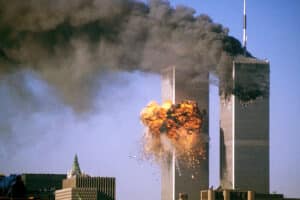
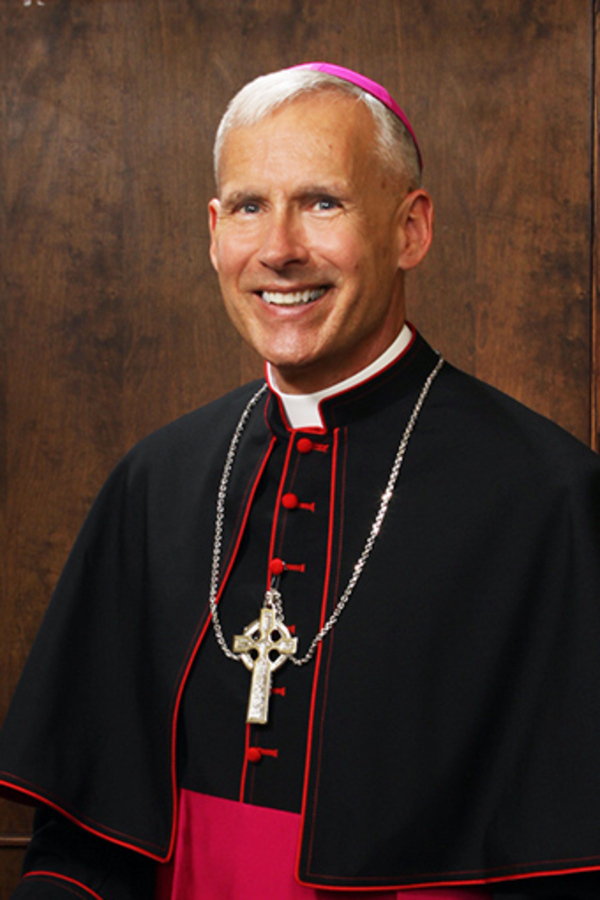
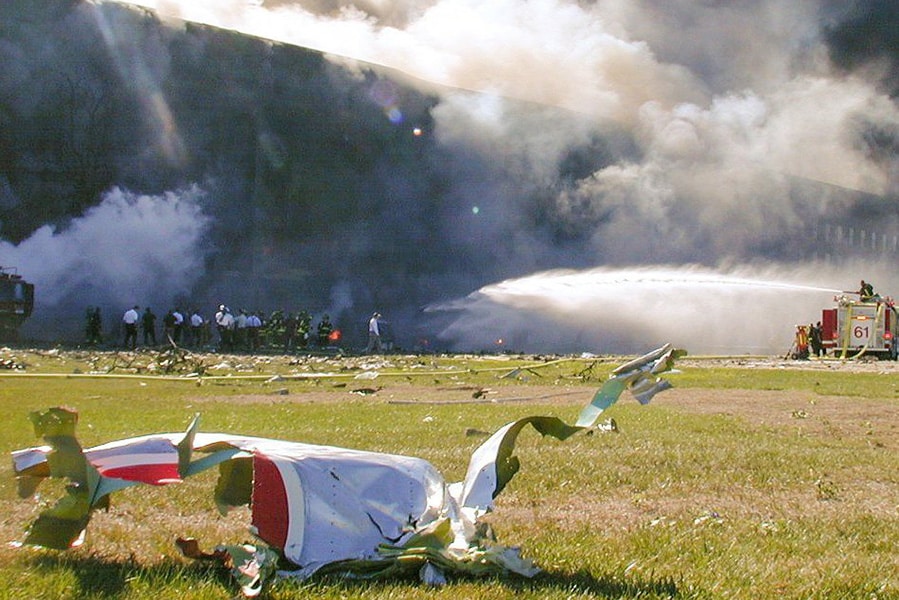
When a hijacked airliner carrying 64 people struck the Pentagon Sept. 11, 2001, then-Father F. Richard Spencer’s first instinct was to reach Walter Reed Army Medical Center, expecting the injured to be taken there. He stayed until 10 p.m., but only four injured people arrived.
The former pastor of St. Peter the Apostle in the Western Maryland town of Oakland then headed to the Pentagon, where he served as a U.S. Army chaplain. For the next two weeks, he ministered to troops and survivors, entering the damaged building as military personnel recovered bodies, praying over the dead and consoling survivors.
“We prayed as a group before each entry and we prayed over each body that was found, packaged and returned outside to the portable morgue,” now-Bishop Spencer said in a June interview with the Catholic Review.
Bishop Spencer, who would later deploy to Iraq and Afghanistan, concelebrated a Mass at Church of the Resurrection in Laurel, then his residence, in honor of those who lost their lives in the terrorist attacks.
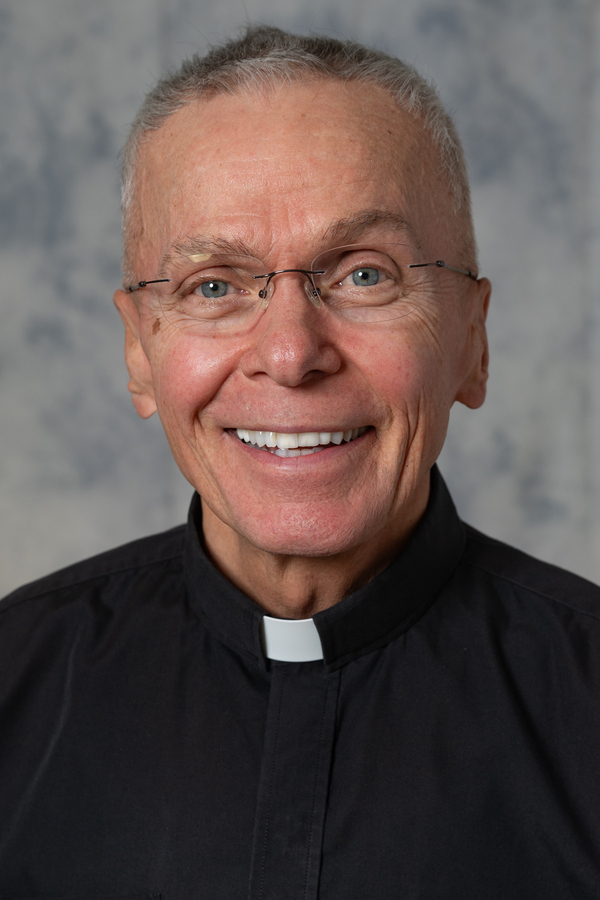
The now-retired bishop was not the only Catholic chaplain with ties to the Archdiocese of Baltimore called to minister in the aftermath. Father Thomas Gills, then pastor of St. Charles Borromeo in Pikesville and an Air Force Reserve chaplain, was called to active duty. Father Gills, who died in 2025, later served in Afghanistan and Iraq, ministering to wounded service members.
“You’re face-to-face with 19- and 20-year olds who had lost an arm or both arms, a leg or both legs, and writhing in pain,” Father Gills said in a 2021 Catholic Review interview, “and you would just touch them through prayer and somehow God would work through those prayers to lift them up and give them renewed hope and an optimistic view of the future and something they would not otherwise have gotten if it had just been medical treatment.”
The demand for ministry was immediate. Baltimore Cardinal Edwin F. O’Brien, then head of the Archdiocese for U.S. Military Services, was in Washington with about 60 Catholic military chaplains for a professional gathering when the attacks occurred. As the military mobilized, commanders quickly sought out their chaplains.
In a 2011 interview with the Catholic Review, he recalled the intense pastoral demands that followed for chaplains.
“It was a busy time for our priests,” Cardinal O’Brien remembered, “and I think a wonderful indication of their effectiveness as pastors to their flock because the military kicked into high gear immediately and a lot of counseling had to be done – a lot of confessions heard, a lot of people returned to the church.”
Read more 9/11


Copyright © 2026 Catholic Review Media
