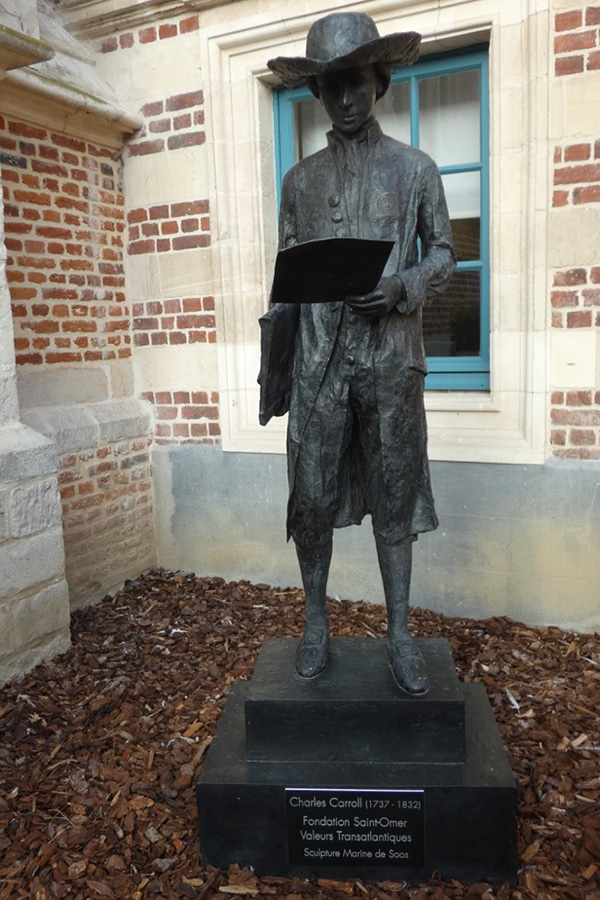
Unable to receive a Catholic education in the British colonies in North America, three young men from wealthy families were sent to Saint-Omer, France, to study at the College of the English Jesuits.
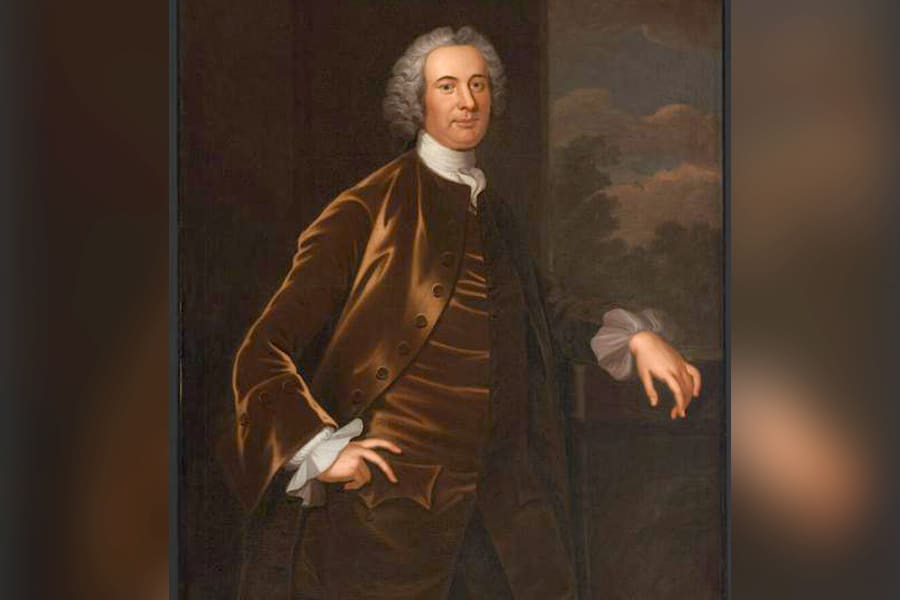
Daniel Carroll of Rock Creek (1730-1796), his brother John Carrroll (1735-1815), and their cousin Charles Carroll of Carrollton (1737-1832), could not have known when they studied in a small town in northern France that they would ultimately wield significant influence in the burgeoning United States of America, shaping government and Church in the late 18th century.
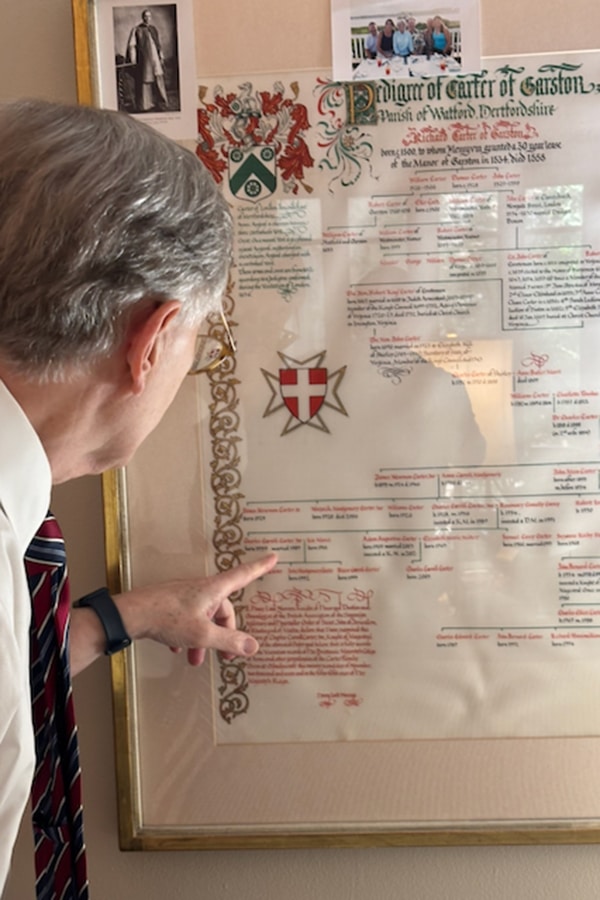
Daniel was one of five men to sign both the Articles of Confederation and the U.S. Constitution. John became a Jesuit priest and was appointed the first bishop of the Diocese of Baltimore, then the only diocese in the nation. Charles was the only Catholic signer of the Declaration of Independence.
Their enduring legacy is felt not only in the U.S. as the country marks the 250th anniversary of the Declaration of Independence. The Saint-Omer Foundation for Transatlantic Values keeps alive the memory of the School of the Jesuits and its connection to the U.S., especially Maryland. Édouard-François de Lencquesaing, the foundation’s president, said that much of what happened 300 years ago at the school is forgotten in both countries. In an interview from his home in Saint-Omer, he said the training in humanism of the Carrolls and other influential families was transformative.
“There’s a correlation between what happened in history a long time ago and the challenges that we have today in our society,” de Lencquesaing said. “And to rebuild the connection between this tradition and the values built up by those gents in Saint-Omer is very structurally important today, where our societies are more or less in a crisis and the democracy is in danger. And I think we can find in history some keys to address today with courage those challenges.”
While the Carrolls went abroad for school because they were excluded in America, they found inclusion in France. “Through education, courage, cleverness and so on, they were able to be around the table and to be acting positively with the group.” And even as the only Catholic among the signers of the Declaration, Charles worked to ensure that the fledgling nation promoted religious freedom at the core of the new democracy.
De Lencquesaing noted that one of the very early Carrolls, Charles the Settler, changed his family motto to “Anywhere, so long as there be freedom.”
The Transatlantic Foundation will commemorate the U.S.’ 250th birthday with a number of events this year. Music will feature prominently, with concerts by the Orchestre d’Harmonie de Saint-Omer featuring American standards such the Gershwins and others, the local annual jazz festival will focus on American jazz instead of European, and classical music concerts will feature American composers.
More importantly, the foundation will host several conferences regarding the Carrolls and their influence, featuring the doctoral thesis work of Emilie Mitran, who has written extensively on American and French history.
The conferences will discuss the work of Benjamin Franklin and Thomas Jefferson in France and how Charles Carroll contributed to the independence process.
The Carrolls from the early days of the country still have an impact on their descendants, generations later.
Charles Carroll Carter Jr., about seven or eight generations descended from Daniel Carroll of Rock Creek, said there are two key phrases in the Declaration of Independence: “life, liberty and the pursuit of happiness” and “our lives, our fortunes and our sacred honor.”
In an interview in his Washington, D.C., apartment, he said the founders intentionally repeated the triple pattern toward the beginning and the end of the document. “It just is so clear to me that they knew exactly what they were doing. They didn’t know how it was all going to turn out, but they knew what they were doing because they trusted each other, they worked together.”
A member of St. Matthew Cathedral in Washington, Carter now works in traffic planning and consultation. He said those stuck in traffic may not realize that when the founders pledged their lives, fortunes and sacred honor, they would never have predicted the growth and hectic pace that could stifle people’s ability to enjoy life and liberty and pursue happiness.
If the country expects to make it another 50, 100 or 150 years, “however many years it’s going to be, can we make it if we have this terrible congestion? Can we make it if we’re delivering this terrible pollution?” he asked.
His father, Charles Carroll Carter Sr. wrote a book, with maps, that chronicles “Creating Capitol Hill: Place, Proprietors and People,” published by the United States Capitol Historical Society. The book details what is considered the “untold story” of the Carrolls of Maryland and their work in building the capitol.
Harper Wright, descended by several generations from Charles Carroll of Carrollton, has a number of items in his study connected to “the Signer,” and so he is “regularly reminded of his accomplishments and what he risked 250 years ago.”
However, he noted, it is important to remember the Carrolls’ values and work in the context of their times. “We must remember that they were ordinary human beings with faults and flaws. Principles such as justice and equality were challenged then and are still challenged today. It can be as difficult today, as it was years ago, to stand up for ‘self-evident’ principles while maintaining a perspective that encompasses the wider community,” he said.
Wright has lived in the U.S. and six other countries. Since 2020, he lives in Australia, where he serves on the pastoral council at St. Paul’s in Moss Vale, New South Wales.
Reflecting on the fact that the Carrolls had to go to another country for education, Wright said that from his international experience, “We have seen what appears to be a greater value in lesser-developed countries for education and hard work. … Many migrants demonstrate great determination during very challenging journeys to reach Europe or the USA.”
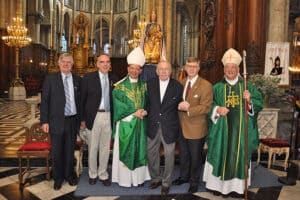
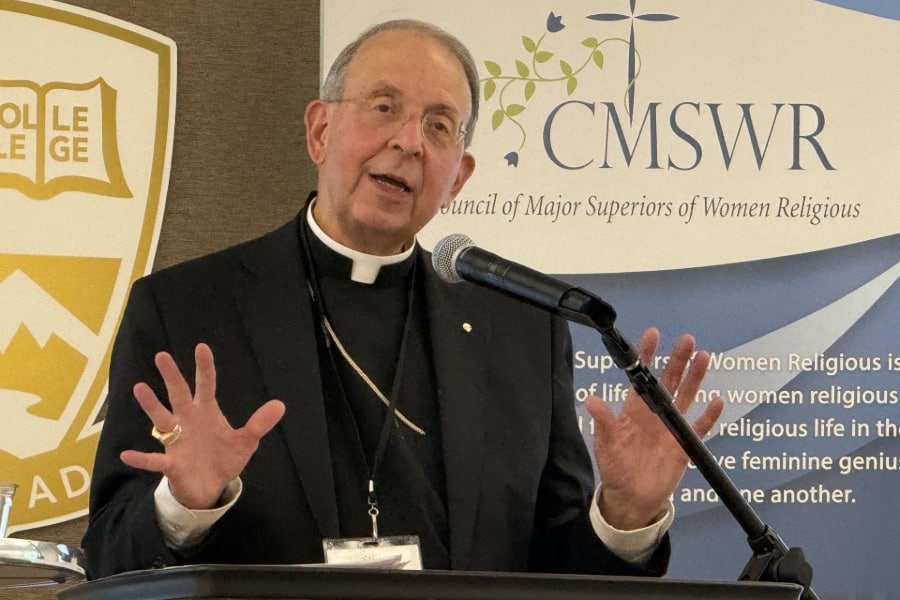
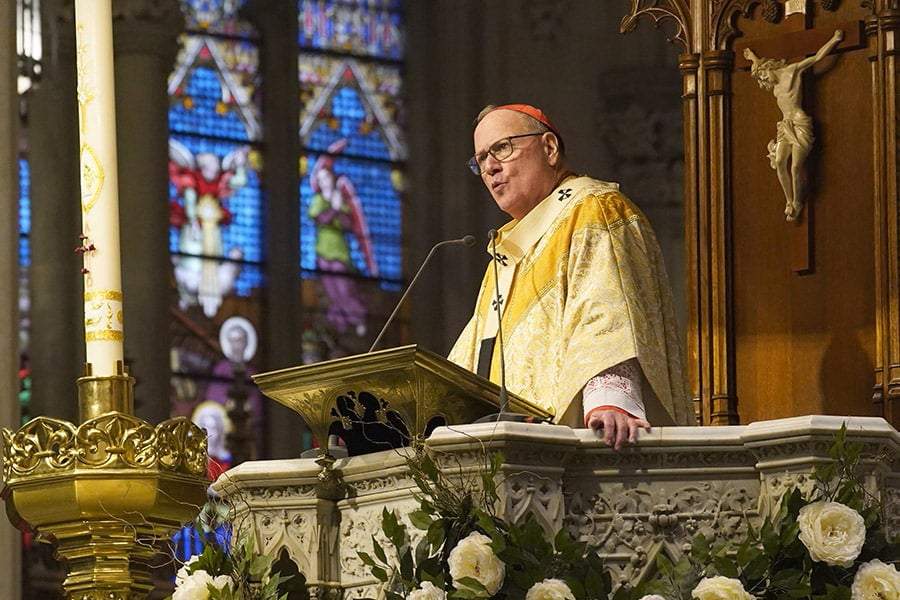
Archbishop William E. Lori, 15th successor of Archbishop John Carroll as head of the Premiere See, preached at a Mass in Saint-Omer Oct. 15, 2017, while commemorating the reopening of the chapel of the College of the Jesuits as a community arts center.
“It was here at Saint-Omer,” Archbishop Lori said, “that these young men who would go on to play such important roles in early days of my country, received a splendid education, rooted in an authentic Christian humanism, capturing the wisdom of ancient Greece and Rome while transforming it through the reasoned faith of the medieval masters.”
He noted that John Carroll received his calling to the Jesuit priesthood while at the school. “As the first Bishop of Baltimore, it would be John Carroll’s mission to find the path for the Catholic faith to take root and grow in the new republic, a wholly new environment for the faith, an environment of religious freedom laced with deep anti-Catholic sentiments.
“His formation at Saint-Omer helped make him a wise and astute leader and to this day we are building on the foundations John Carroll so carefully laid,” Archbishop Lori said at the Mass.
read more america 250

Copyright © 2026 Catholic Review Media
