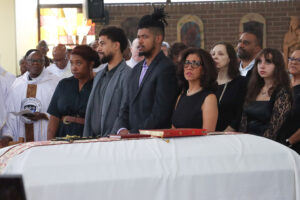
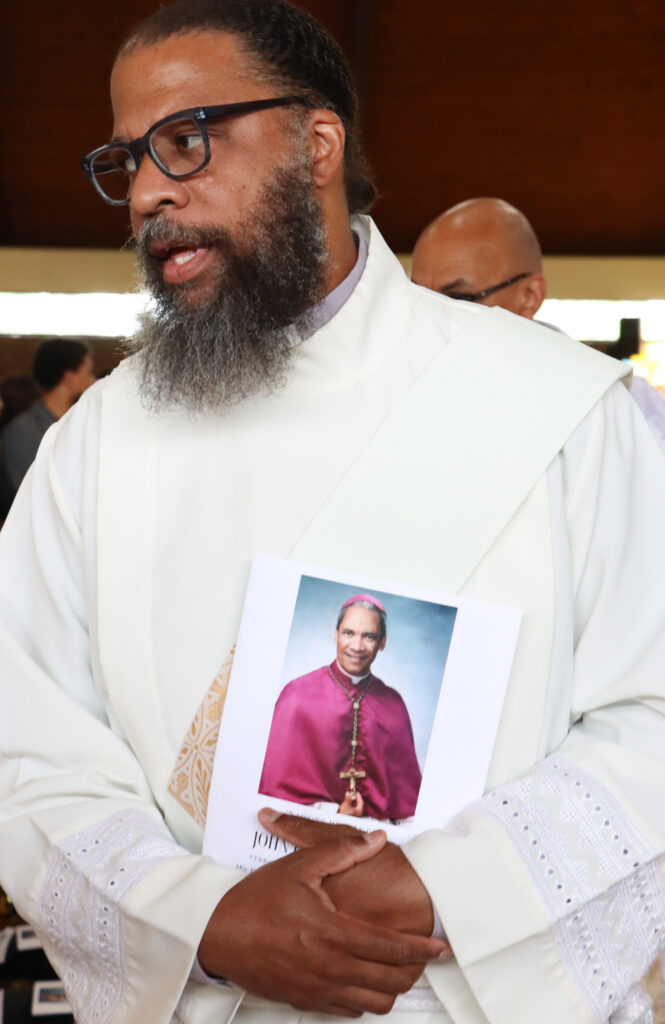
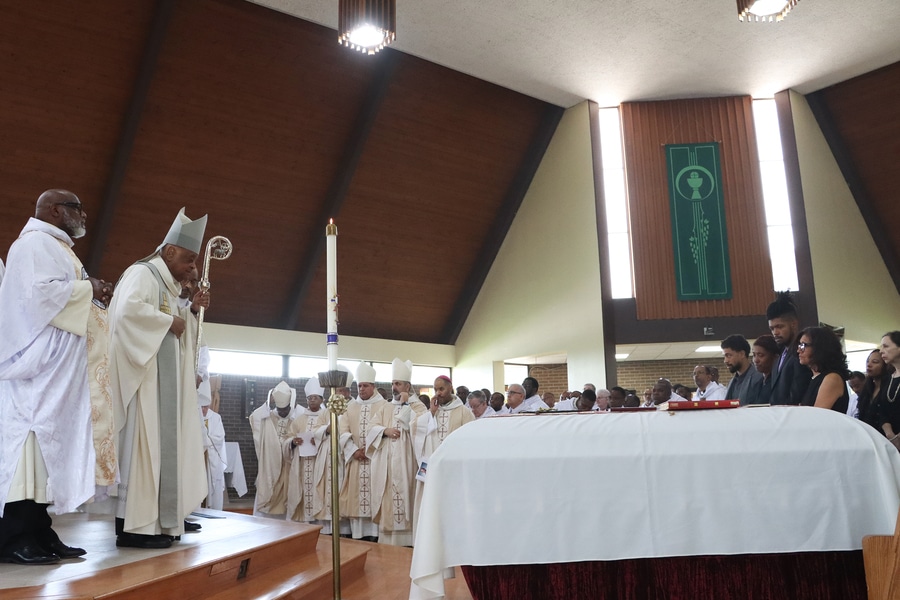
WASHINGTON, D.C. – Bishop John Huston Ricard, S.S.J., was memorialized June 1 for his ability to make everyone feel they belong, in various communities and particularly in the Catholic Church.
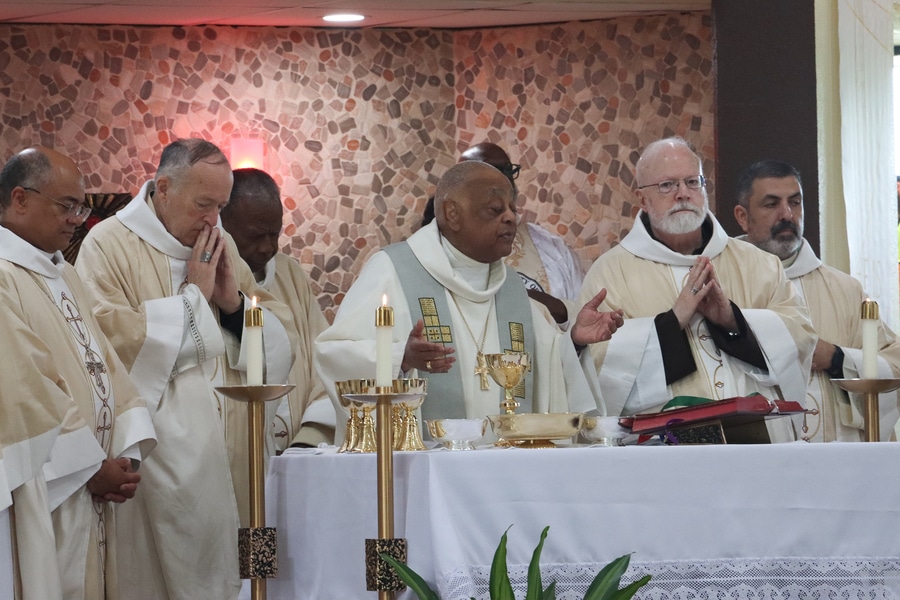
“He made us all feel that we belonged to him … he certainly claimed us,” said Cardinal Wilton Gregory, retired archbishop of Washington, in his homily,
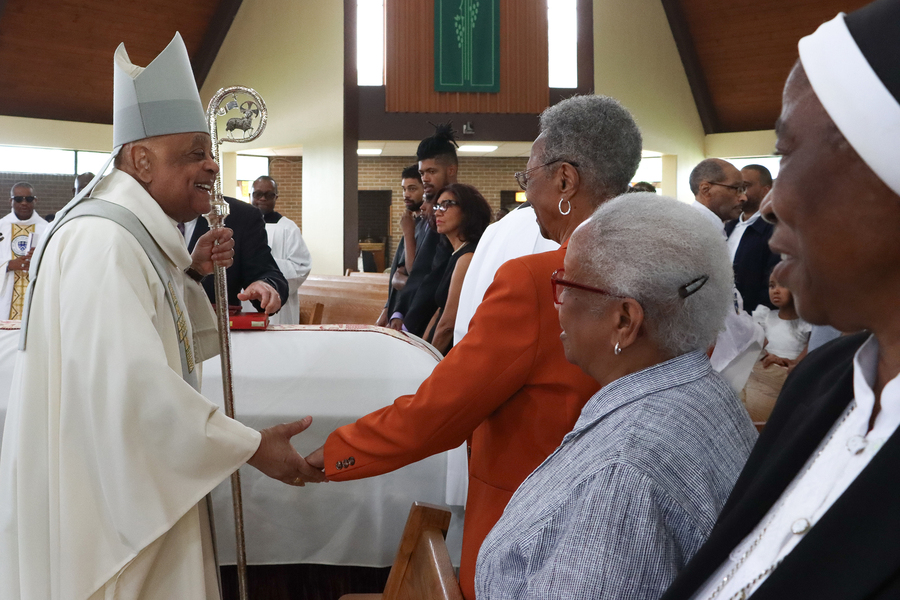
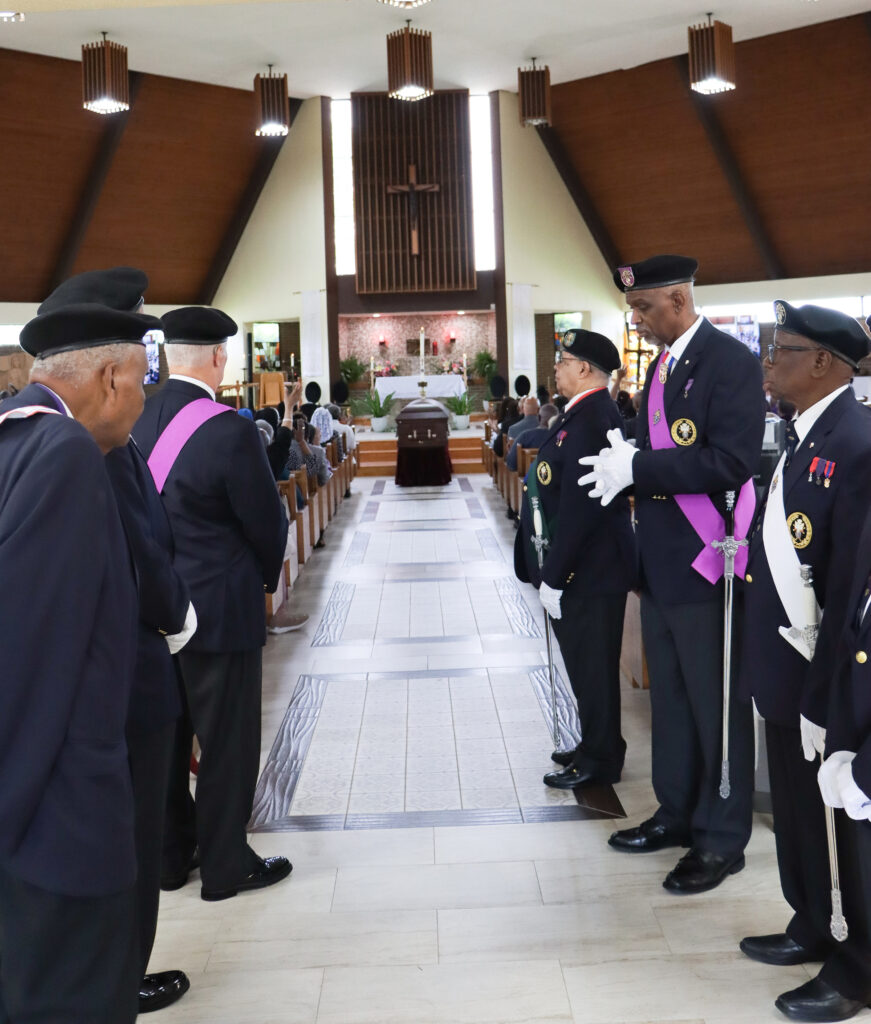
The depiction was echoed by fellow Josephites, friends, colleagues and the current archbishop of Washington before and during a Mass of Transferal at Our Lady of Perpetual Help, the Washington, D.C., parish where Bishop Ricard was pastor just before being made an auxiliary bishop of the Archdiocese of Baltimore in 1984.
Bishop Ricard died May 20 at the age of 86. His June 5 funeral and final resting place will be in the Diocese of Pensacola-Tallahassee, Fla., which he led from 1997 until his retirement in 2011 due to ill health. After somewhat recovering his health, Bishop Ricard resumed active ministry with the Josephites, serving as rector of St. Joseph’s Seminary in Washington and then was twice elected superior general of the Baltimore-based society.
The packed church in Southeast Washington included some of Bishop Ricard’s family members, parishioners from his time serving at Our Lady of Perpetual Help and other parishes. Deacon Darron Woodus, Baltimore Archbishop William E. Lori’s delegate for Black Catholics in the Archdiocese of Baltimore, was present. There also were more than 50 priests, three cardinals and about a dozen bishops, notably including seven prelates who are Black. With them was Bishop-designate Robert Boxie, like Bishop Ricard a native of Louisiana, and a priest of the Archdiocese of Washington, who will be installed as auxiliary bishop of Washington in July.
Cardinal Gregory said Bishop Ricard’s life echoed the central theme of the St. Joseph’s Society of the Sacred Heart, the formal name of the Josephites, “reminding people of color that we, too, have a cherished place in the father’s home and in his heart.”
Millicent Hawkins, a young adult parishioner at Our Lady of Perpetual Help when Bishop Ricard was pastor, said before the Mass that “he was very charismatic, always kind and told you what was on his mind.
“He was always vocal about who we are as people in the Church and how the Church should be treating us,” Hawkins said.
Cardinal Robert McElroy, archbishop of Washington, recalled a time when he was a new bishop. Then-retired Bishop Ricard and Archbishop Joseph Fiorenza, also retired from the Archdiocese of Galveston-Houston, led a campaign to revamp a statement on poverty being considered by the U.S. Conference of Catholic Bishops. As retired bishops, they had no vote in the matter, Cardinal McElroy said, but they argued that the document was “very drab, very lifeless and didn’t reach into the issues.”
“They were both retired but they spoke up and changed the tenor of what was happening,” Cardinal McElroy said in remarks at the end of Mass.
Cardinal Gregory noted that Bishop Ricard was instrumental in reviving the National Black Catholic Congress in 1987 after it languished in the early decades of the 20th Century.
“Bishop Ricard cherished his African-American heritage and he was constantly and actively engaged in promoting those gifts and treasures of our cultures,” Cardinal Gregory said. His efforts around reviving the NBCC stemmed from “his desire to make sure that our people knew that they belong to the Father and therefore they belong to one another.”
Also in an interview before the Mass, Ron Jackson told his version of a story echoed by others, of Bishop Ricard effectively arm-twisting him into leaving his job as a lobbyist with the National Urban League to join the staff of USCCB. Jackson will retire later this year from his current position as senior director of government affairs for Catholic Charities USA, wrapping up 35 years of work in the Church.
As a fellow Black Catholic from the Gulf Coast who was also raised in the time of Jim Crow laws, Jackson said he felt a kinship with Bishop Ricard, dating back to his time as a pastor at Our Lady of Perpetual Help, when Jackson was a law student. In those days, then-Father Ricard persuaded Jackson that despite the pressures of law school, he could find the time to help out with the parish youth group, Jackson said, laughing at the memory.
The importance of how Bishop Ricard was shaping the Church hit Jackson especially poignantly, he said, years later when the bishop invited him to be an adviser to the U.S. bishops’ Domestic Policy Committee, which the bishop chaired.
Jackson said the first time he walked into the committee meeting and saw Bishop Ricard there to lead, “it was like a light went on.”
“Both being from the South in the Jim Crow era, and we both had a history in social work, I looked across the room and saw him, it really hit me,” Jackson said, marveling still at the implications of how far they had come and the work they could do together.
John Carr, former director of the Department of Justice, Peace and Human Development for the USCCB, worked with Bishop Ricard for many years. Carr said the bishop “played a major role in turning the attention of the bishops’ conference to Africa, and in setting up an annual collection to aid the Church in Africa.”
Carr said the bishop was “a lovely friend, with a sardonic sense of humor,” who was especially effective in representing the positions of the U.S. bishops in meetings with the White House or members of Congress. He was instrumental in the work to pass a children’s tax credit and affordable health care bills, Carr said.
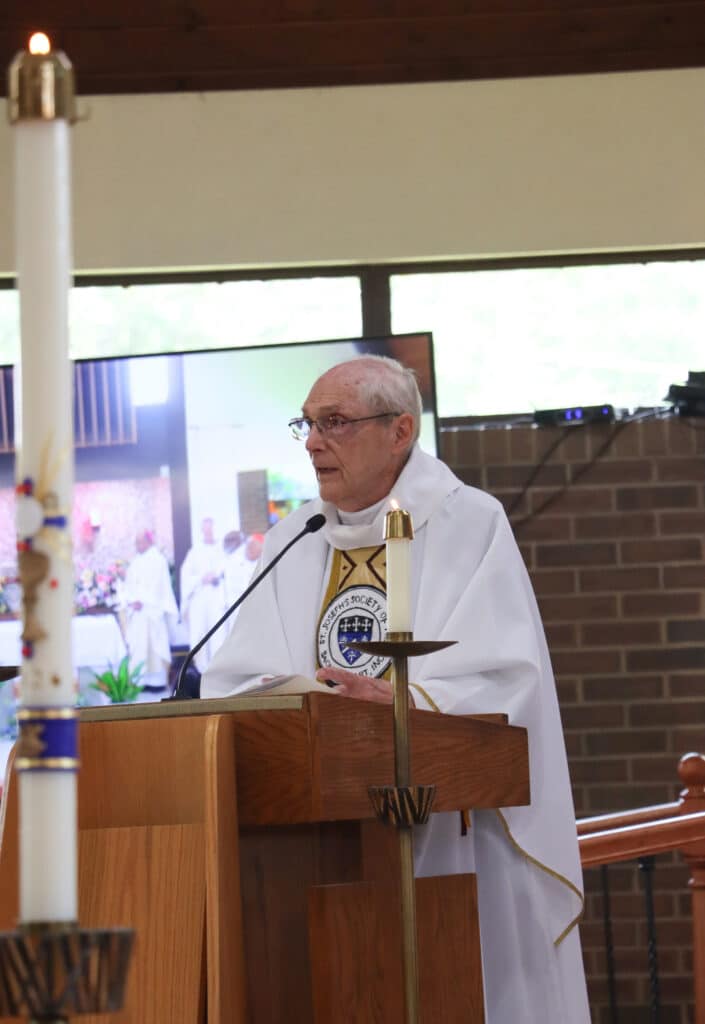
Josephite Father Kenneth Ugwu, pastor of Holy Name of Jesus Parish in Los Angeles, described Bishop Ricard’s approach to leadership “as a father and listener. That goes a long way.”
Ralph McCloud, former director of the Catholic Campaign for Human Development and a Josephite aspirant, worked with and lived alongside Bishop Ricard for many years. He said the bishop “identified with everyone, from popes to people on the street. He was not at all pretentious and was always eager to listen.”
Less well-known is the role Bishop Ricard had in Catholic-Muslim relations and in helping shepherd the birth of a new nation, South Sudan.
Steve Hilbert, a former foreign policy adviser to the USCCB, said Bishop Ricard accompanied several delegations to Sudan and the newly evolving nation of South Sudan. “In 2011 when they raised the flag of the new nation of South Sudan for the first time, he was there.”
Hilbert added: “It’s not too often anyone is there for a new nation to be established.”
Another former USCCB staff member, John Borelli, now special assistant to the president for Catholic Identity and Dialogue at Georgetown University, said in an email to The Josephite Harvest magazine that Bishop Ricard chaired a set of conversations with African American Muslim leader Warith Dean Mohammad.
Chairing the discussions with Mohammad and Catholic leaders at the invitation of the then- Baltimore archbishop Cardinal William H. Keeler, Bishop Ricard “brought a level of seriousness, professionalism and dedication to justice for all to the conversation that ensured its success,” Borelli said.
Cardinal Keeler later had Bishop Ricard and Borelli with him when he brought Mohammad and five of his associates on a visit to Rome.
“His presence in the early years of that interreligious relationship was a significant factor for its success,” Borelli said.
Bishop William Wack, who succeeded Bishop Ricard in the Diocese of Pensacola-Tallahassee said in remarks at the end of Mass that he “is following a giant” in the role. He noted that Bishop Ricard was insistent that his remains be buried in the diocese he led in St. Michael’s Cemetery. The small burial ground holds the remains of some people who were enslaved. It is believed to be one of the two oldest cemeteries in Florida.
In addition to Deacon Woodus, other representatives from the Archdiocese of Baltimore who participated in the Mass include Monsignor Richard Bozzelli, pastor of St. Bernardine with Historic St. Peter Claver in West Baltimore; Father Stephen Ositimehi, associate pastor of St. Bernardine with Historic St. Peter Claver; Missionary of St. Paul Father Austine Inwang, pastor of St. Joseph in Odenton; Spiritan Father Uju Okeahialam, pastor of St. Francis Xavier in East Baltimore and retired Deacon Paul Shelton.
This story was shared with the Catholic Review by The Josephite Harvest.
Also see: Bishop John H. Ricard, first Black bishop of Baltimore and Pensacola-Tallahassee, dies at 86
More local news

Copyright © 2026 Catholic Review Media
