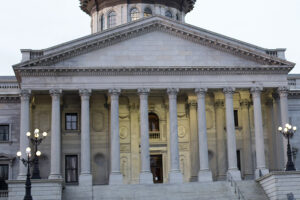
COLUMBIA, S.C. (OSV News) — A judge put a temporary hold on South Carolina’s six-week ban on most abortions May 26, a day after Republican Gov. Henry McMaster signed the measure into law.
Judge Clifton B. Newman, an at-large judge of the South Carolina Circuit Court, said in a statement that it is his view “the status quo should be maintained” until the state Supreme Court reviews it. “It’s going to end up there,” he added.
Two days after the South Carolina Senate passed a six-week ban on most abortions in a 27-19 vote late May 23, McMaster’s signed the measure into law. His office said it was effective immediately, but now is halted with Newman’s ruling.
The South Carolina Supreme Court previously struck down a similar six-week abortion ban.
In a tweet after the vote and before he signed the bill, McMaster tweeted: “The General Assembly has handled this issue in a thoughtful, transparent and collaborative manner. Tonight, our state is one step closer to protecting more innocent lives.”
The governor took to Twitter after Newman’s decision, saying, “We will continue fighting to protect the lives of the unborn in South Carolina and the constitutional law that protects them. I hope that the Supreme Court will take this matter up without delay.”
Senate action on a House-amended version of the Fetal Heartbeat and Protection from Abortion Act (SB 474) came nearly a week after the other chamber approved the measure. The Senate had already passed its own version of the bill in February but accepted changes made by the House.
McMaster had called lawmakers back for a special session to consider the measure, which bans most abortions after cardiac activity can be detected — a point before many women know they are pregnant, effectively banning most abortions. The bill does include exceptions for rape, incest, life of the mother, as well as for a fatal fetal anomaly. South Carolina law had permitted abortion until 22 weeks gestation.
If it were to go into effect, it would mean that every Southern state in the U.S. except Virginia has moved to restrict abortion since the Supreme Court issued its decision in Dobbs vs. Jackson Women’s Health Organization last June.
The South Carolina Catholic Conference supported the bill and, after the House vote, praised lawmakers for advancing it.
“The Catholic Conference thanks our pro-life legislators for their resolve and commitment to defending the unborn,” the conference wrote in a post on its website.
Planned Parenthood South Atlantic tweeted after the Senate vote: “We have just one thing to say to the state of South Carolina: We’ll see you in court.”
In a statement after the May 17 House vote, Vicki Ringer, the organization’s director of public affairs, had urged the Senate ” to once again reject this overreach into our health care decisions.”
“Lawmakers are wasting more taxpayer dollars to shove an abortion ban down our throats during yet another special session,” she said.
Caitlin Connors, Southern regional director for SBA Pro-Life America, said in a May 23 statement that “South Carolina’s heartbeat protection reflects the will of the people and the science.”
“A heartbeat is one of the key vital signs of life, and once that heartbeat is detected, a baby has more than a 90 percent chance of surviving to birth. This measure will save thousands of individuals each year who will enrich the lives of others and the state of South Carolina,” she said.
“We thank South Carolina House members for their persistence during marathon days last week when Democrats introduced 1,000 amendments as a stall tactic in their effort to continue late-term abortions, and we’re grateful the Senate today sent this much needed protection to Gov. McMaster’s desk,” Connors added.
Read More Respect Life
Trump calls off Hegseth plan to livestream execution denounced by Catholic leaders
President Donald Trump on Oct. 15 called off Secretary of Defense Pete Hegseth’s plans to livestream the execution of Fort Hood shooter Nidal Malik Hasan by firing squad in December.
Continue Reading Trump calls off Hegseth plan to livestream execution denounced by Catholic leaders
Catholics challenge moral, legal grounds of ‘barbaric’ US plan to livestream execution
Catholic leaders across the nation are continuing to express their shock and concern over the Trump administration’s plans to livestream a military execution.
Capital punishment is ambiguously inadmissible
In late September, the state of Tennessee attempted and failed to execute Christa Pike, after 31 years in prison.
Continue Reading Capital punishment is ambiguously inadmissible
Military archbishop denounces ‘public spectacle’ of Hasan execution, obliges Catholic recusal
Just hours after his audience with Pope Leo XIV, Archbishop Timothy P. Broglio of the U.S. Archdiocese for the Military Services issued a strong and lengthy statement Oct. 12 against the planned livestreamed execution by firing squad of Ford Hood shooter Nidal Malik Hasan, calling it a “public spectacle of barbarically killing our adversaries.”
Pope Leo declares death penalty ‘inadmissible’ attack on dignity of human person
Pope Leo XIV has posted on his official X account that the Catholic Church holds the death penalty to be “inadmissible because it is an attack on the inviolability and dignity of the person.”
Continue Reading Pope Leo declares death penalty ‘inadmissible’ attack on dignity of human person
FDA expects to draft mifepristone safety review next year; pro-life groups call it ‘insufficient’
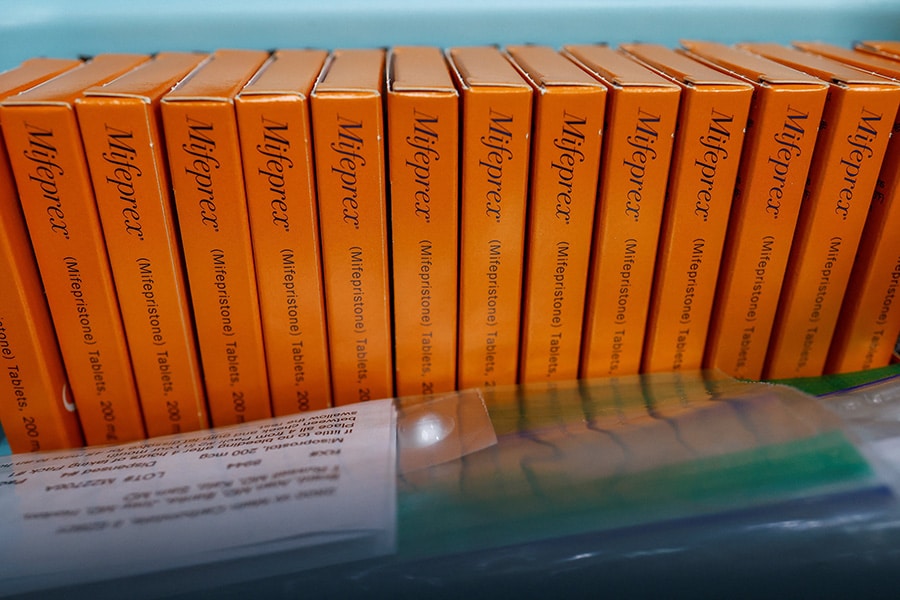
The Food and Drug Administration’s safety review of mifepristone is expected to stretch into next year, according to an Oct. 7 court filing, prompting disappointment from pro-life groups.
Copyright © 2023 OSV News
