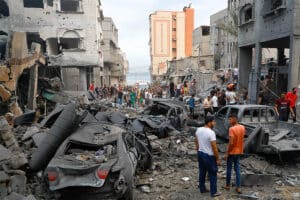
ROME (OSV News) — The shock of the surprise attack by Hamas militants on Israel, in which hundreds were killed, wounded or kidnapped, has left a traumatic mark on Israeli citizens, said the country’s ambassador to the Vatican.
“I would say this is a catastrophe that I would describe in biblical dimensions,” Ambassador Raphael Schutz, Israeli ambassador to the Holy See, told OSV News Oct. 9.

“Total families were murdered — grandparents, parents and children, in villages, in kibbutzim, in the towns around Gaza. There is a feeling of a national trauma,” Schutz said.
The number of men, women and children who have died, he added, is on “a scale that we have not known, I would say, since the beginning of the establishment of Israel.”
The attack began in the early hours of the morning Oct. 7 when Hamas militants launched an attack in southern Israel, killing civilians in cars and homes, and taking hostages to Gaza.
Several videos seen by OSV News showed militants gunning down an entire family in their home, while another video showed militants stepping on the body of a civilian shot in his car.
The attack prompted Israeli Prime Minister Benjamin Netanyahu to declare war against Hamas. According to Palestine’s official news agency WAFA, Palestinian President Mahmoud Abbas held an emergency leadership meeting after the attack in which he emphasized “the right of the Palestinian people to defend themselves against the terrorism of settlers and the occupation forces.”
Due to the coordination of the attack, several media outlets speculated that Hamas militants may have received intelligence from Iran. Although Iran publicly expressed its support for Palestine, the country’s foreign ministry denied Oct. 9 allegations of its involvement.
While acknowledging the attack represented “a huge intelligence failure” by Israel, Schutz said that at the moment it was “premature to ask about how exactly it happened.”
“These are questions that should be asked at a later stage because right now I believe that in Israel, of course, we have to fight in order to regain control of our territory and punish Hamas and the Islamic Jihad in a way that they will regret the crimes that they commit,” he said.
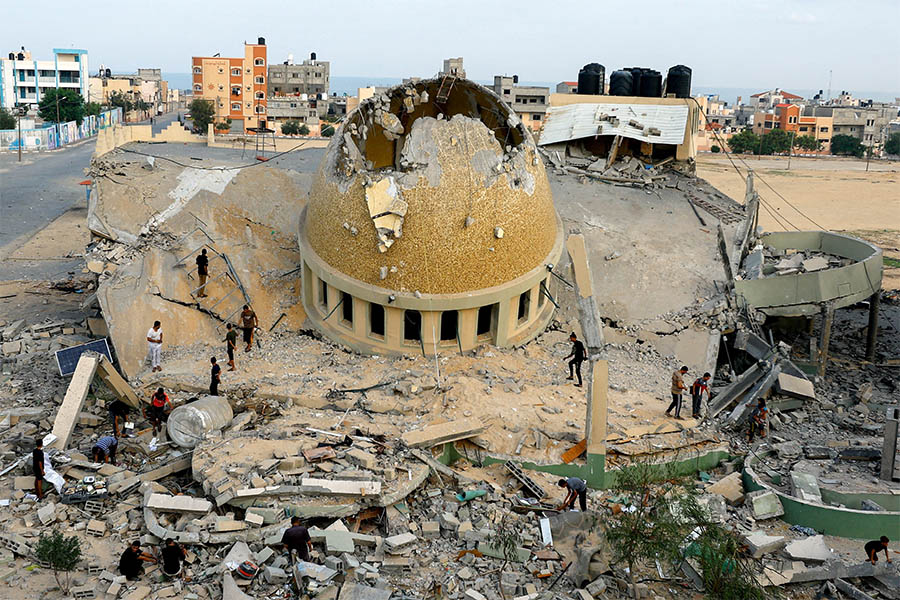
The surprise attack also drew widespread condemnation from the international community, with many world leaders calling for restraint and an end to further escalation of violence.
During his Sunday Angelus address, Pope Francis led pilgrims in praying for the victims of the attack and “for all who are living hours of terror and anguish.”
“Let it be understood that terrorism and war do not lead to any resolutions, but only to the death and suffering of so many innocent people. War is a defeat! Every war is a defeat! Let us pray that there be peace in Israel and in Palestine,” he said.
Schutz told OSV News he had several “private conversations” with Vatican officials, in which they expressed their prayers “for peace and for the well-being of the people in Israel.”
However, the ambassador’s office criticized an Oct. 7 statement by the Patriarchs and Heads of the Churches in Jerusalem which said that the violence and suffering in the Holy Land was “due to the prolonged political conflict and the lamentable absence of justice and respect for human rights.”
“We unequivocally condemn any acts that target civilians, regardless of their nationality, ethnicity or faith,” the Patriarchs’ statement read.
In a statement released Oct. 9, the Israeli Embassy to the Holy See objected to the “immorality of using linguistic ambiguity” and said many of those who spoke on the attack “didn’t find it difficult to understand it and condemned the hideous crime, naming its perpetrators and acknowledging Israel’s basic right to defend itself against the atrocity.”
Nevertheless, the Patriarch’s statement, the embassy said, “suffers from the same aforementioned immoral linguistic ambiguity.”
“From reading it, there is no way to understand what happened, who were the aggressors and who the victims. It is especially unbelievable that such a sterile document was signed by people of faith,” the statement read.
Regarding the statement, Schutz explained that it was important for religious leaders, as well as the Holy See, “to be more explicit in manifesting this solidarity and the acknowledgement of our right for self-defense.”
“The church usually uses a certain language which is unique and which I understand. But the question is, in light of the magnitude of such an atrocity, if this language is sufficient. This is a question that I would like to leave open,” he said.
The attack follows a year of increasing violence from both settlers and the Israel Defense Forces after the election of Israel’s far-right nationalist government.
In an Oct. 8 interview with CNN’s Fareed Zakaria that has gone viral since, Mustafa Barghouti, a former information minister for the Palestine government, which is in control of parts of the West Bank and leader of Palestinian National Initiative, argued that the current flare up is a “direct result of the continuation of the longest occupation in modern history.”
“Israeli occupation of Palestinian land since 1967, this is 56 years of occupation, that has transformed into a system of apartheid. A much worse apartheid than what prevailed in South Africa,” he said.
“And what you see today is a reaction to several things (including primarily) settlers’ terrorist attacks on Palestinians in the West Bank that has (sic) evicted already 20 communities in an act of ethnic cleansing. Two-hundred-forty-eight Palestinians were killed by the Israeli army and settlers in the West Bank, including 40 children,” Barghouti said.
OSV News reached out to the Palestinian ambassador to the Holy See for comment Oct. 9, but did not hear back.
The Israeli ambassador said that extremist groups in other parts of the world, such as Pakistan and Nigeria, have carried out attacks targeting innocent Muslims, yet link their actions “to the Israeli-Palestinian conflict.”
“Acts of terror in Pakistan, Nigeria or other places are rightly perceived as the hideous crimes they are. Only when such atrocities target Israelis some try to explain, understand or even justify them with the false pretext of the conflict,” he said.
This, he warned, has led some to justify Hamas’ attack against Israel.
“People who are trying to find rational explanations anchored in a territorial conflict to such war crimes are wrong. This has nothing to do with the borders of Israel; it has to do with the existence of Israel,” Schutz said.
In hospital, Pope Leo’s tests show ‘good recovery of the operated lung,’ doctors say
Doctors treating Pope Leo XIV said Oct. 15 that tests show “good recovery of the operated lung” two days after his cancer surgery.
US bishops’ president urges Catholics ‘to put their faith before politics’ in November elections
Ahead of the Nov. 3 midterm elections, Archbishop Paul S. Coakley, president of the U.S. Conference of Catholic Bishops, issued a statement Oct. 14 reminding the faithful that “For citizens in a representative democracy such as our own, participation in public life — including voting — is both a right and a responsibility.”
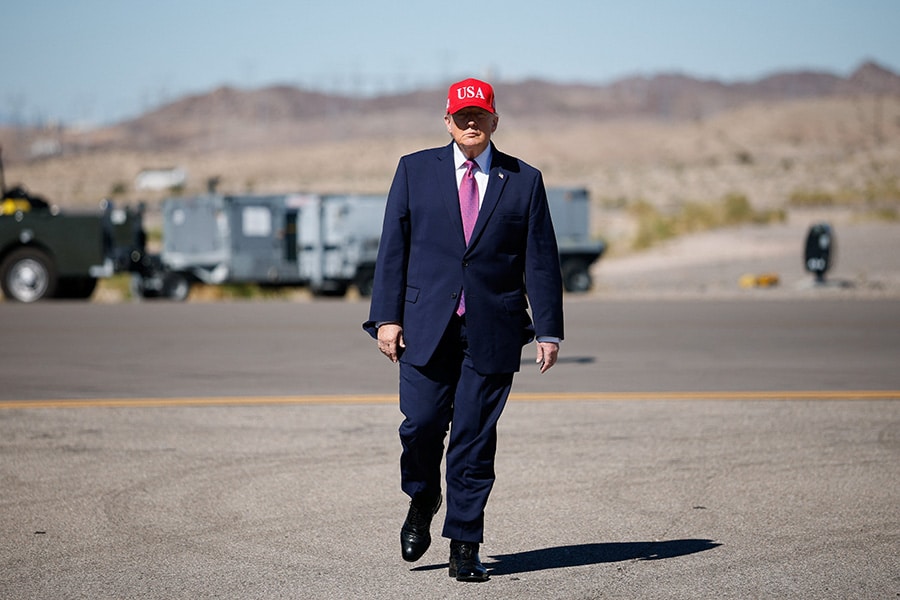
Trump sends Pope Leo ‘get well’ wishes following cancer diagnosis
President Donald Trump offered Pope Leo XIV his “best wishes” and “love” in a short interview with reporters Oct. 14, the day after the pope’s doctors announced that the pope had been diagnosed with lung cancer.
Continue Reading Trump sends Pope Leo ‘get well’ wishes following cancer diagnosis
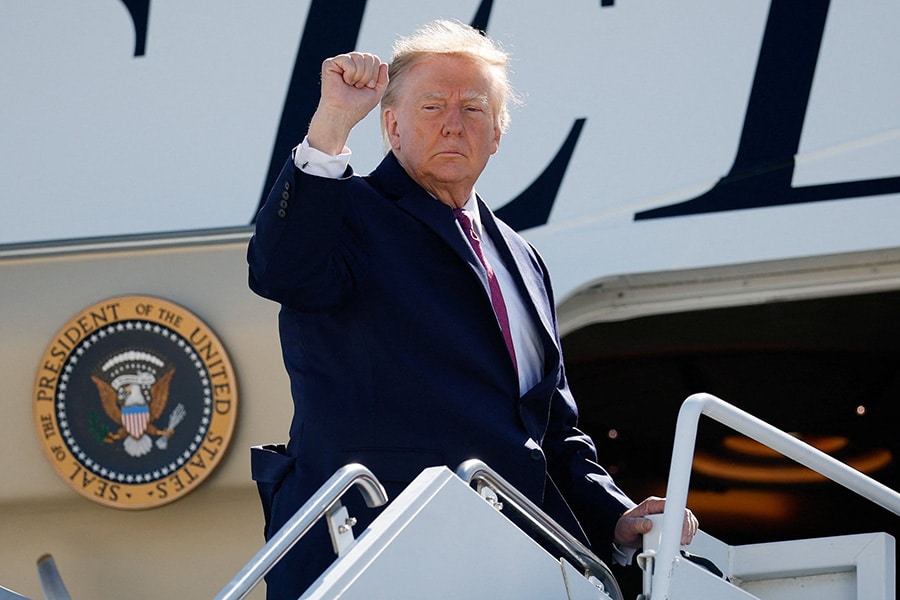
Trump calls off Hegseth plan to livestream execution denounced by Catholic leaders
President Donald Trump on Oct. 15 called off Secretary of Defense Pete Hegseth’s plans to livestream the execution of Fort Hood shooter Nidal Malik Hasan by firing squad in December.
Continue Reading Trump calls off Hegseth plan to livestream execution denounced by Catholic leaders
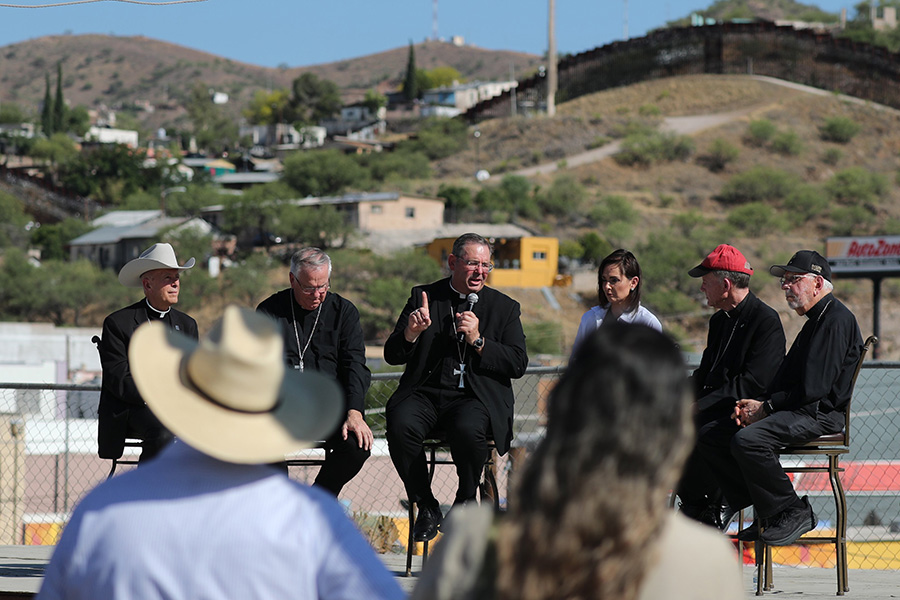
Catholic, evangelical leaders issue joint call for compassionate immigration reform
Catholic and evangelical leaders issued an ecumenical statement Oct. 13 as part of a joint effort to call for compassionate immigration reform.
Continue Reading Catholic, evangelical leaders issue joint call for compassionate immigration reform
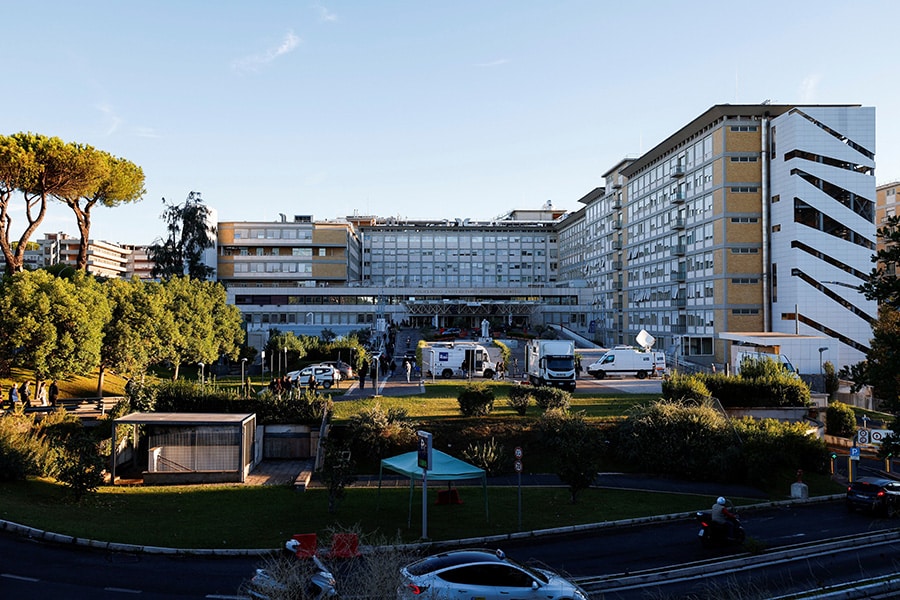
Pope Leo XIV starts respiratory physical therapy a day after lung cancer surgery
Pope Leo XIV underwent more medical exams and started respiratory physical therapy on Oct. 14, the day after the lung cancer surgery that removed the lower lobe of the pope’s right lung.
Continue Reading Pope Leo XIV starts respiratory physical therapy a day after lung cancer surgery
Copyright © 2023 OSV News
