As fears of a return to full-scale war in South Sudan escalate, Catholic bishops in the country have reiterated their call for peace and dialogue, amid fighting and mobilization in parts of the country.
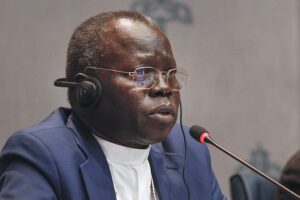
Cardinal Stephen Ameyu Martin Mulla of Juba, president of the Sudan and South Sudan bishops’ conference said the security and humanitarian situation in the country had deteriorated rapidly, as he pointed at the renewed fighting between government forces and the Sudan Peoples’ Liberation Army in Opposition and other armed groups in Jonglei and Eastern Equatoria states.
In a Jan. 27 statement, the cardinal urged “all the leaders in the Unity Government and the non-signatories to the Revitalized Peace Agreement to stop war and embrace dialogue, listen to one another and to the people you claim to fight for their sake.”
“The citizens are not properties, they are human beings and it will be good to know their pains, hunger for peace, and their desire to live in freedom,” Cardinal Mulla said.
Quoting Pope Francis’ message to the people of South Sudan, where the late pontiff called for “no more war” and “no more bloodshed,” the cardinal said, “We are coming again with urgency to reiterate our appeal for dialogue, unity, peace and reconciliation.”
South Sudan gained independence in 2011, but in 2013, the world’s youngest nation descended into a brutal civil war that killed nearly 400,000 people and forced millions out of their homes.
The Revitalized Agreement on the Resolution of the Conflict in South Sudan, signed in 2018 in Addis Ababa, Ethiopia, ended countrywide fighting and allowed the formation of a transitional government.
Pope Francis had a role in bringing together warring sides of the conflict. On April 12, 2019, the pontiff famously knelt and kissed the feet of South Sudan’s political leaders at the end of a spiritual retreat at the Vatican.
Many of the 2018 pact’s commitments, including general elections and reforms in national security, were never implemented.
Now, the Catholic bishops are concerned that the pact is being disregarded and dialogue sidelined.
“As shepherds and leaders in this country, we are alarmed and surprised by the total disregard for the full implementation of the revitalized peace agreement,” said Cardinal Mulla, after the bishops raised concerns twice in 2025 that the pact is not being implemented properly.
“The growing discord within the Unity Government, attacks and counter attacks between the warring parties in many parts of the country is spreading rapidly causing displacements, hunger, and many other inhuman conditions,” the cardinal warned in his Jan. 27 statement.
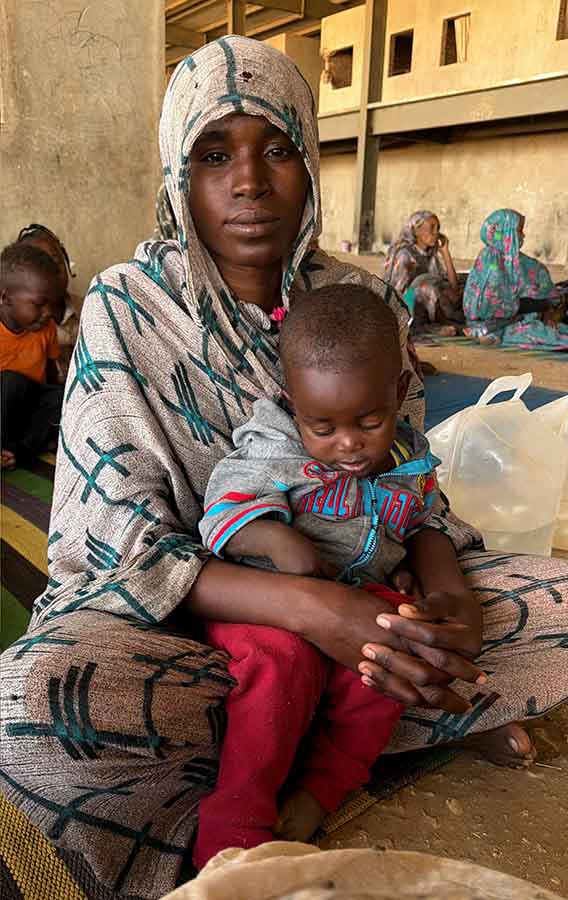
The political tensions, violence and repeated climate shocks — including flooding and economic collapse — has left an estimated 10 million people in urgent need of humanitarian assistance.
At the same time, bishops are concerned about hate speech, misinformation and disinformation that has amplified on social media. The focus is a hate speech by a top general from the government army who called for indiscriminate violence against civilians in Jonglei state.
“Directing forces to ‘spare no lives’ is a direct call to genocide. We call on all the fighting forces not to heed to any directive that risks victimizing innocent civilians and pitting communities against each other,” said Cardinal Mulla.
Father John Gbemboyo Joseph Mbikoyezu, the pastoral and social communication coordinator in the Sudan and South Sudan Catholic bishops’ conference, told OSV News that since the signing of the revitalized peace agreement, the recent escalation was leading to full-scale war, with a total disregard of dialogue.
“The warring parties are mobilizing their affiliates to defend what they believe as theirs. They are mobilizing resources for war, in disregard of the economic challenges facing the country,” said Father Mbikoyezu.
The churches have also rejected a proposed government amendment to the revitalized peace agreement, warning that if pursued prematurely or unilaterally, it would undermine its spirit, intention, and its gains.
“Peace and stability cannot be built through selective implementation or actions taken outside the collective will of the signatories,” said the Rev. Tut Kony Nyang, an evangelical pastor who is general secretary of the South Sudan Council of Churches, which also includes the Catholic Church.
Rev. Nyang said the churches emphasized the full, faithful and timely implementation of the pact, which remained the most credible and viable pathway to sustainable peace and stability that the people of South Sudan rightly desire.
He called on all parties to exercise responsibility, restraint and good faith, and place the welfare of the people above political interests.
“The prolonged suffering of citizens demands leadership committed to peace, stability and accountability,” he said.
Read More Religious Freedom
Copyright © 2026 OSV News
