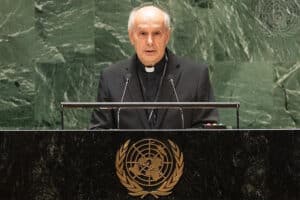
The Holy See’s diplomat to the United Nations has reiterated a call to end nuclear proliferation, saying the best way to honor the late Pope Francis is to “rediscover the spirit” that created the global organization following World War II, and collaboratively strive for peace.
Archbishop Gabriele Caccia, the Holy See’s U.N. permanent observer, shared his thoughts in two April 29 addresses at the U.N.’s New York headquarters.
At a plenary meeting of the U.N. General Assembly convened to commemorate Pope Francis — who died April 21 at age 88 — Archbishop Caccia stressed the late pontiff “recognized the fundamental importance of multilateralism, with the U.N. at its center.”
While “not afraid to highlight the need” for what he’d called “reform and adaptation,” the late pope was “clear” that the U.N. was necessary, said Archbishop Caccia.
He cited three key moments that demonstrated Pope Francis’ belief in the importance of the U.N. — the late pope’s Sept. 25, 2015, address to the U.N. General Assembly, delivered amid an apostolic journey to the U.S. and Cuba; a joint statement Pope Francis issued with U.N. Secretary-General António Guterres in 2020; and the iconic March 27, 2020, prayer of Pope Francis during the COVID-19 pandemic.
The pandemic prayer in particular — which saw a solitary Pope Francis praying for the world from an empty St. Peter’s Square amid the rain — vividly illustrated global interdependence, said Archbishop Caccia. He added that Pope Francis had also warned of an “uncontained pandemic, a moral one, which he defined as ‘the globalization of indifference.'”
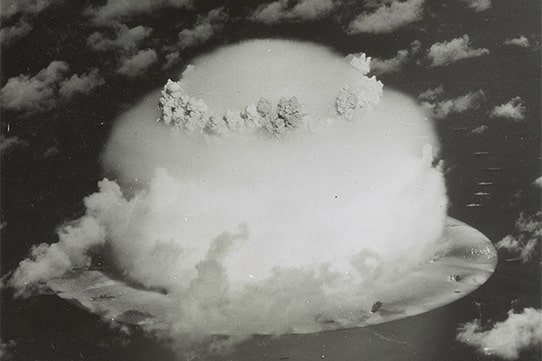
Such indifference, coupled with fear, has led to an increased “erosion of international peace and security, widespread political instability and a growing disregard for multilateralism and international law,” said Archbishop Caccia, speaking April 29 during the U.N. general debate on the Treaty on the Prohibition of Nuclear Weapons.
Adopted by the U.N. in 2017, the treaty serves as a legally binding instrument towards the total elimination of nuclear weapons. To date, there are 94 state signatories and 73 states party to the treaty.
Neither the United States or Russia, which together account for approximately 88 percent of the world’s nuclear weapons, have adopted the treaty.
“Conflicts continue to erupt and to intensify in various regions, further exacerbating global tensions and human suffering, especially among those in the most vulnerable situations,” Archbishop Caccia said.
Currently, more than 120 conflicts are taking place throughout the world, according to the International Committee of the Red Cross. Among the most prominent are Russia’s war in Ukraine; the Israel-Hamas war; civil wars in Myanmar and Sudan; insurgencies in various African nations, as well as in Afghanistan and Pakistan; and armed gang violence that has destabilized Haiti.
Military spending has soared worldwide, with the global total reaching a record high of close to $2.5 trillion in 2024, up more than 7% from 2023 and averaging just under 2% of nations’ gross domestic product. The European Union, the United Kingdom and Canada have accelerated defense investments, as the U.S. under the Trump administration has unsettled longstanding defense alliances.
Yet, said Archbishop Caccia, “international peace cannot rest on a false sense of security based on the threat of mutual destruction, total annihilation or the fragile balance of military powers.”
Rather, “the international community has a moral responsibility to advance disarmament, particularly in light of the rapid evolution of delivery systems and cybertechnologies,” he said.
The archbishop underscored the “urgent need” to prioritize disarmament, with military spending redirected for peaceful purposes through a global fund dedicated to hunger elimination and development for emerging nations — a proposal the Holy See had previously advanced.
Archbishop Caccia once again urged nations to adopt the U.N.’s treaty against nuclear proliferation.
“Even as the winds of war blow with renewed force and fear threatens to overshadow peace and human fraternity,” he said, “a world free of nuclear weapons is not only possible, but necessary.”
Read More World News
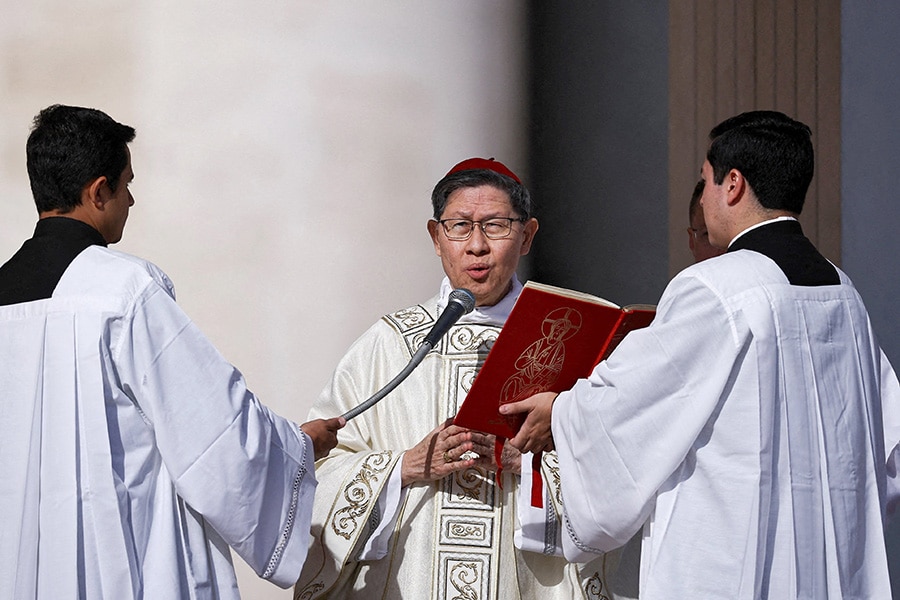
Cardinal Tagle reads Pope Leo’s homily to bishops: ‘The world has no future without strong families’
Cardinal Luis Antonio Tagle, the newly elected dean of the College of Cardinals, presided over the closing Mass for the Vatican meeting of bishops on marriage and family on Oct. 14, reading aloud a homily that had been prepared by Pope Leo XIV prior to his lung cancer surgery, saying, “The world has no future without strong families.”
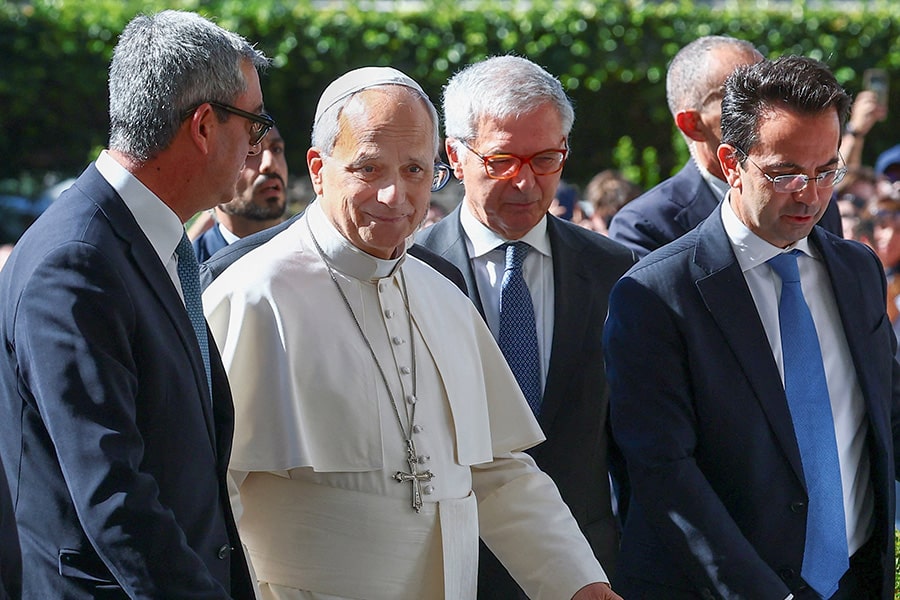
US bishops, lawmakers offer prayers for Pope Leo after cancer diagnosis
Following the Holy See’s Oct. 13 announcement that Pope Leo XIV was diagnosed with lung cancer and had the lower lobe of his right lung removed, Church and civic leaders expressed their hope and prayers for his full recovery.
Continue Reading US bishops, lawmakers offer prayers for Pope Leo after cancer diagnosis
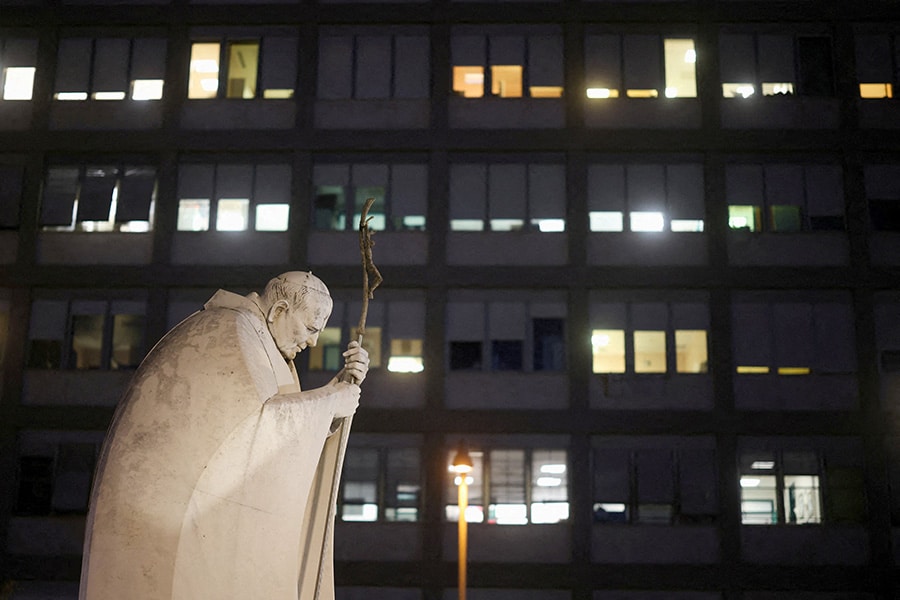
Pope Leo XIV’s surgery reveals lung cancer
Pope Leo XIV has been diagnosed with lung cancer following a 90-minute surgery on Oct. 13 during which surgeons removed the lower lobe of the pope’s right lung.
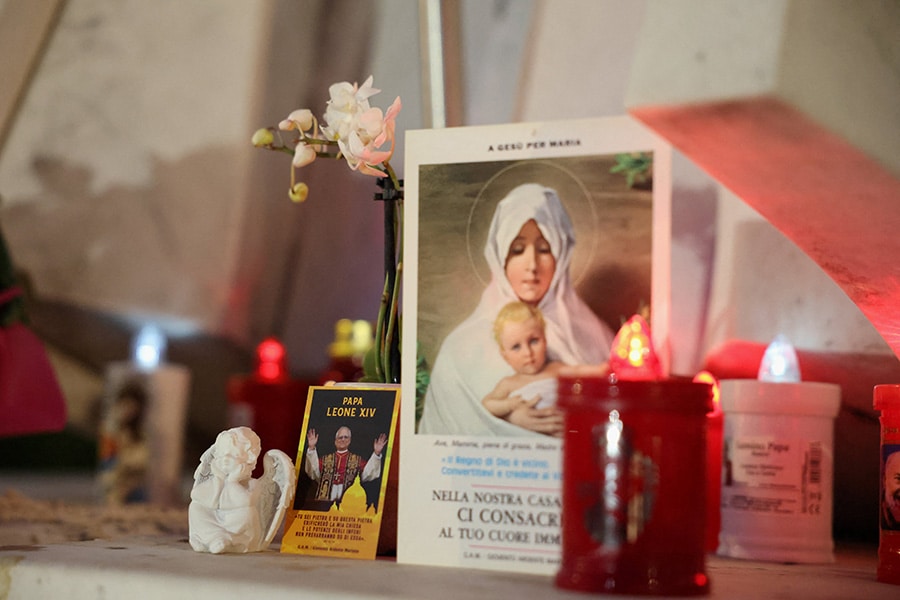
Pope Leo XIV’s lung surgery completed successfully, Vatican says
Pope Leo XIV’s surgery to remove a lung nodule on Oct. 13 was completed successfully, the Vatican announced that night.
Continue Reading Pope Leo XIV’s lung surgery completed successfully, Vatican says
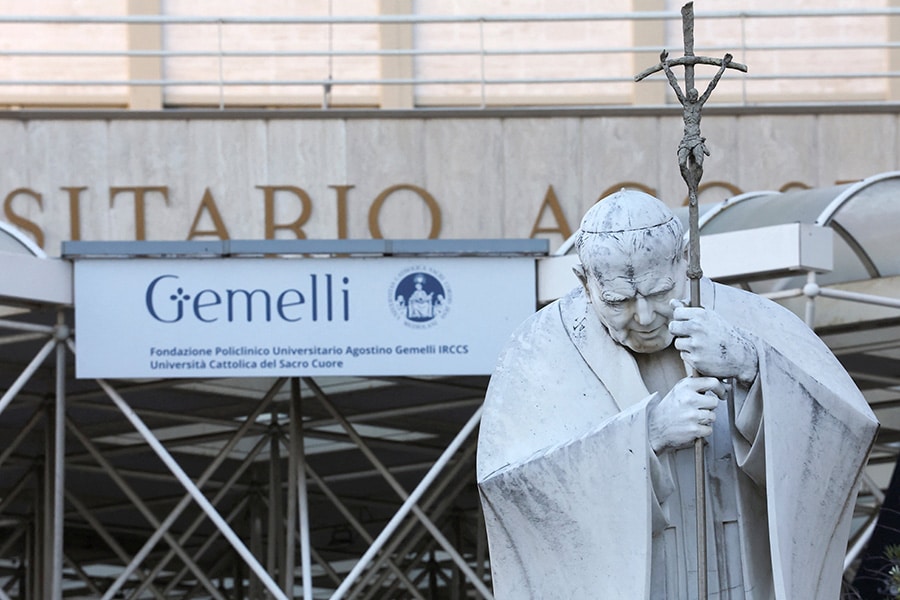
Prayers for pope ahead of surgery invoke Our Lady of Fatima on miracle of sun anniversary
As Pope Leo XIV entered the hospital Oct. 13 for surgery, Cardinal Stanislaw Dziwisz, longtime secretary to St. John Paul II, offered prayers through the intercession of the Polish pope and Our Lady of Fatima.
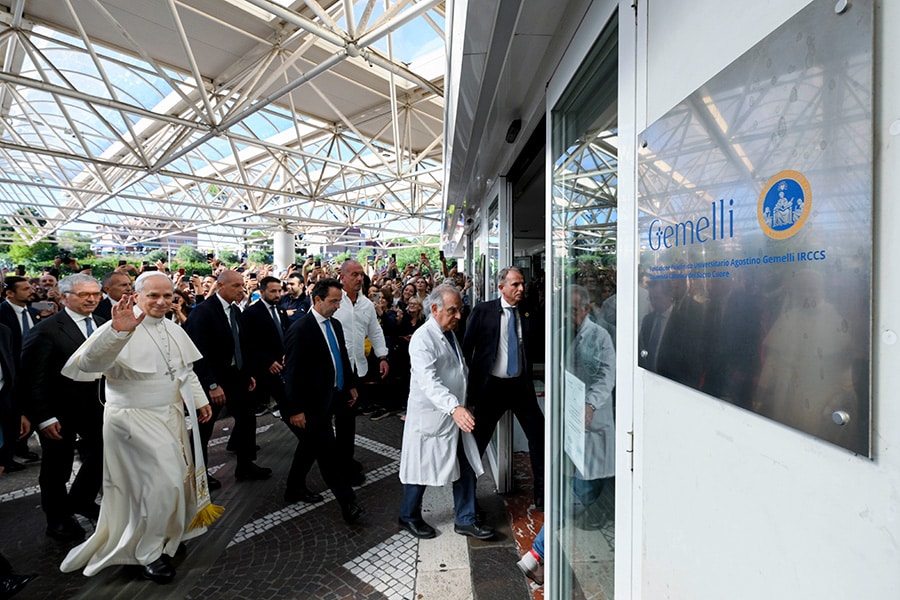
Pope Leo XIV admitted to hospital for afternoon lung surgery
Pope Leo XIV was admitted Oct. 13 to Rome’s Gemelli Hospital, where the Vatican has confirmed that he will undergo surgery to remove a lung nodule in the afternoon.
Continue Reading Pope Leo XIV admitted to hospital for afternoon lung surgery
Copyright © 2025 OSV News
